Data Manager
Email: R.M.Habibi@sussex.ac.uk
Tel (UK): 01273 876802
Tel (International) +44 1273 876802
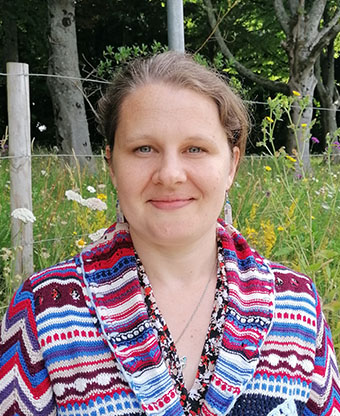
Dr Ruth Habibi
Ruth completed her BA in Applied Psychology, MRes in Psychological Research Methods and PhD in Psychology at the University of Sussex. Since then she has worked as a Research Assistant in the department of Health and Social Care at Kingston University and St George's University of London on a series of research projects investigating support services for family carers; a Research Assistant at the Centre for Dementia studies at BSMS on a project investigating quality of life in people with dementia and their carers; and more recently as a Research Coordinator at Surrey and Sussex Healthcare NHS Trust, coordinating delivery of a portfolio of studies at East Surrey Hospital.
Ruth joined SHORE-C in July 2022. She manages the data and documentation of various SHORE-C studies and helps develop the Unit's data infrastructure.
- TARGET2
New series of workshops due to begin September 2024
- REDUCe2
RCT looking at HRQoL with two kinds of ascetic drains in untreatable cirrhosis patients. The study will compare an alternative intervention, insertion of a palliative tunnelled long-term abdominal drain (Group 1 intervention - LTAD), to standard of care large volume paracentesis (Group 2 intervention - LVP) in the management of refractory ascites.
- Q-ABC
The aim of the Q-ABC study is to address the current paucity of information available to patients and clinicians facing treatment decisions where increasingly evidence is showing surgery and radiotherapy can provide equivalent overall survival.
- TARGET2
A new series of TARGET workshops commisioned by Exact Sciences.
- TRUSTING AZ Workshops 2025 Evaluation
Evaluation of a series of workshops around the UK building on the previous workshops and incorporating new materials covering extra topics and scenarios.
- PUMMaCE
This online survey aimed to gather information from people living with multiple myeloma about their understanding of the condition and the words and phrases used to describe their diagnosis, treatment and support. The survey explored what doctors and nurses said or did that helped or hindered understanding, and what family or friends have said or done that was helpful or not so helpful.
The survey has now closed and the data are being analysed. A report summarising the finding will be available here soon.
- CANCODE
In order to develop an educational programme to help communication professionals working with d/Deaf and deaf-blind people (e.g. sign language interpreters) better understand what they may be required to interpret in cancer consultations, we are conducting a survey to find out what communication professionals feel are the biggest challenges when working in cancer consultations.
- Jenkins V, Habibi R, Hall V, Leonard P, Lawn A, Naik J,...Fallowfield L. (2024) Roll-out of an educational workshop to improve knowledge and self-confidence of healthcare professionals engaged in mainstreaming of breast cancer genetics. PLoS ONE 19(7): e0307301. Find it online here 19/07/2024
- Fallowfield L, Starkings R, Palmieri C, Tait, A, Stephen L, May S, ... & Jenkins V. (2023). Living with metastatic breast cancer (LIMBER): experiences, quality of life, gaps in information, care and support of patients in the UK. Supportive Care in Cancer; 31(8): 459. Find it online here 11/07/2023