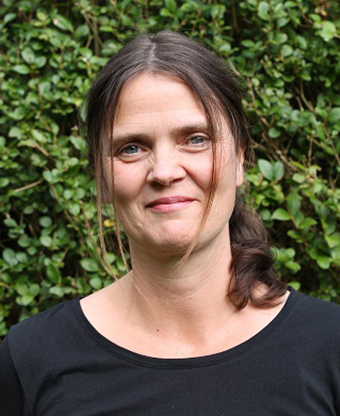
Principal Research Fellow
Email: h.harder@sussex.ac.uk
Tel (UK): 01273 873028
Tel (International) +44 1273 873028
Dr Helena Harder
After her MSc in Psychology (Utrecht University, the Netherlands) Helena completed a PhD at the Erasmus University Rotterdam in 2007. She worked for many years within academic research and clinical practice and has been an HCPC-registered Clinical Psychologist since 2011.
Her research interests include understanding the effects of cancer treatment on cognitive functioning and QoL (particularly in bone marrow or haematopoietic stem cell transplant and breast cancer). Other interests focus on the benefits of complementary treatment (i.e. yoga) after cancer treatment, measuring treatment-related side-effects (e.g. chemotherapy-induced diarrhoea, anxiety in older stroke survivors, and the use of mHealth (i.e. smartphone apps) in cancer recovery and rehabilitation.
- BRCA Direct 2
Following on from the successful BRCA DIRECT trial, NHS England has provided funding to implement the BRCA DIRECT digital pathway in 10-20 centres in England over an 18 month period.
- REDUCe2
RCT looking at HRQoL with two kinds of ascetic drains in untreatable cirrhosis patients. The study will compare an alternative intervention, insertion of a palliative tunnelled long-term abdominal drain (Group 1 intervention - LTAD), to standard of care large volume paracentesis (Group 2 intervention - LVP) in the management of refractory ascites.
- Q-ABC
The aim of the Q-ABC study is to address the current paucity of information available to patients and clinicians facing treatment decisions where increasingly evidence is showing surgery and radiotherapy can provide equivalent overall survival.
- HER2+ CNS Surveillance
This study is investigating if it is acceptable to people with HER2 positive secondary breast cancer with no history of brain metastases to be randomised to surveillance via MRI scanning versus no surveillance.
- Haddadin Y, Anagnostopoulou V, Bremner S, Harder H, Starkings R, Lambert D, ... Verma S. (2025). Palliative long-term abdominal drains vs. large volume paracentesis for refractory ascites secondary to cirrhosis: protocol for a definitive randomised controlled trial (REDUCe2 study). Trials; 26(1):193. Find it online here 04/06/2025
- Starkings R, Harder H, Fallowfield L, Shilling V. (2025) Exploring the real-world experience of abemaciclib treatment for HR +, HER2- metastatic breast cancer - a qualitative analysis of the IMPACTOR study. Supporive Care in Cancer; 33 (421). Find it online here 26/04/2025
- Harder H, Starkings R, Fallowfield L, May S, & Shilling V. (2025) Incidence and management of diarrhoea associated with abemaciclib and endocrine therapy for hormone-receptor positive, HER2-negative metastatic breast cancer: the UK patients' experiences. Support Care Cancer 33, 422. Find it online here 26/04/2025
- Torr B, Kavanaugh G, Hamill M, Jones C, Harder H, Allen S, ..., Turnbull C.(2025) Uptake, utility and resource requirements of a genetic counselling telephone helpline within the BRCA-DIRECT digital pathway for mainstreamed BRCA testing in patients with breast cancer. Journal of Medical Genetics. (2025;0): 1-9. Find it online here 12/03/2025
- Torr B, Jones C, Kavanaugh G, Hamill M, Allen S, Choi S et al. (2024)BRCA-DIRECT digital pathway for diagnostic germline genetic testing within a UK breast oncology setting: a randomised, non-inferiority trial. British Journal of Cancer 131, 1506-1515. Find it online here 01/10/2024
- Wheelwright SJ, Russ S, Mold F, Armes J & Harder H (2024) Symptomatic presentation of cancer in primary care: a scoping review of patients' experiences and needs during the cancer diagnostic pathway. BMJ Open; 14:e076527. Find it online here 20/03/2024
- Rademaker C, Bhandary S, & Harder H. (2021). Knowledge, awareness, attitudes and screening practices towards breast and cervical cancer among women in Nepal: a scoping review. Journal of Public Health; 30: 1995-2027. Find it online here 22/12/2021
- Wyld L, Reed M W, Collins K, Burton M, Lifford K, Edwards A, ... & Thompson A M. (2021). Bridging the age gap in breast cancer: cluster randomized trial of two decision support interventions for older women with operable breast cancer on quality of life, survival, decision quality, and treatment choices. British Journal of Surgery; 108(5): 499-510. Find it online here 23/03/2021
- Harder H, Shilling V M, May S F, Cella D, Schmid P, & Fallowfield L J. (2020). The development and initial evaluation of the Diarrhoea Management Diary (DMD) in patients with metastatic breast cancer. Breast Cancer Research and Treatment; 183: 629-638. Find it online here 27/07/2020
- Harder H, Starkings R M, Fallowfield L J, Menon U, Jacobs I J, & Jenkins V A. (2019). Sexual functioning in 4,418 postmenopausal women participating in UKCTOCS: a qualitative free-text analysis. Menopause (New York, NY); 26(10): 1100. Find it online here 10/08/2019